The Death of Graphic Design? What You Should Do Instead
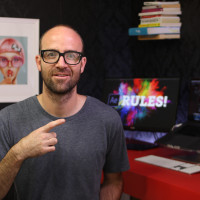
Daniel Scott
@dan
After 15 years in the design industry, I've witnessed design evolve completely. Today, I want to share why I believe UX design is the future and why you should consider pivoting your career in that direction.
The Changing Landscape of Graphic Design
When I first entered the industry, there was an open door for designers. If you knew how to use Photoshop, Quark, Freehand, or Illustrator, you were valuable - even if your design skills weren't exceptional.
But things have shifted dramatically. Now we're entering a stage where:
Design tools are being simplified and packaged with templates
AI is making design more accessible
Marketing managers, product managers, and even clients are now equipped to handle the lower-level design tasks
This shift has significantly reduced the demand for traditional graphic designers.
Why UX Design Is the Future
If I had to start my career again knowing what I know now, I'd absolutely go into UX design. Here's why:
Universal demand: Every industry needs UX designers.
Job growth: Ten years ago, UX was barely mentioned in job listings. Now, virtually every design position includes some UX requirements.
Compensation: UX designers earn significantly more than graphic designers – not just a little more, a LOT more.
This is the first key definition to keep in mind for the future.
What is UX Design, Really?
In layman's terms, UX design is designing websites and apps. But it's much more than just creating attractive interfaces (the UI part).
UX design involves:
Researching your users
Wireframing solutions
Creating minimum viable product versions
Testing and iterating
The fundamental difference is that traditional design was selling a vision to the client. UX design flips this around: "You've got a problem. Here are good ideas to solve it. Let's test them and get to a point where we know it works." It's not about selling your vision – it's about having data to prove what works.
Why Companies Value UX Designers
UX design has a direct connection to business outcomes. As a graphic designer, success meant making sure the client was happy – a relationship that was important but hard to measure.
As a UX designer, success is increasing sign-up flow by specific percentages. There's a direct connection to the company's bottom line. When it comes to resource allocation, it's easy to see why companies invest in finding the best UX designers they can afford.
Hey, that’s me working on a new logo in Canva!
Why AI Won't Replace UX Designers (Yet)
While AI and templates are making it easier for non-professionals to handle graphic design work, UX design hasn't been affected as much. Why? Because UX solutions aren't one-size-fits-all.
A solution that worked perfectly for one client might completely fail for another. Each business presents unique challenges that require human problem-solving and testing. UX is less about visual composition and more about testing until you have data proving what works.
Transitioning to UX Design as a Graphic Designer
If you're a graphic designer worried about making the switch, I have good news: it's easier than you think!
You already know a large chunk of what you need. Skills like:
Typography
Information hierarchy
Composition
Grid systems
These all translate beautifully to web and app design. What you're missing is mainly the language and methodology.
You can read up on agile frameworks and scrum working methods. Once you do, you'll start recognizing concepts that are just different names for things you already know.
In fact, I'd rather enter UX design as a 40-year-old graphic designer than as a 20-something newcomer. Your experience gives you a massive advantage!
5 Tips to Get Started in UX Design
Read, take courses, and follow talented (and handsome) designers on Youtube like this one!
1. Immerse Yourself
Do a quick dive into UX to see if you even like it:
Take short courses
Attend meetups (in-person or online)
Follow UX YouTubers
Figure out if these are your people and if this feels right for you.
Figma has become an industry standard user interface design tool.
2. Learn the Tools
While there are a few options out there, Figma is really the only game in town right now.
The beauty of learning tools is that you'll also learn the process. As you build projects, you'll start understanding the language and context of UX design.
If you want something more intense, consider a 6-month or 12-month bootcamp. Just make sure to talk to people who've completed the program first – some are brilliant, others not so much.
This is the best secret for building a strong portfolio and presenting your work.
3. Build a Portfolio
A portfolio is absolutely crucial for landing your first UX job. Ideally, your portfolio should include three different projects to showcase your range.
Good sources for portfolio pieces include:
Projects from courses you've taken
Design challenges (we host them at BYOL)
Spec work (redesigning existing products)
When choosing spec work, don't go for Nike or other already-beautiful designs. Instead, find ugly, problematic designs and show how you improved them.
Your portfolio needs to do two things:
Look visually impressive
Show your working process
Employers want to see your thought process, your involvement, and how you solve problems.
From wireframe to hi-fi prototype is Figma zero to hero workflow!
4. Say Yes to Everything
In the beginning, take any opportunity that comes your way – even if it means getting paid in beers. What you need is experience to show the next level in your career.
Internships are fantastic if you can afford them. They're competitive, but the experience is invaluable.
Get out there, learn while working, and diversify your knowledge and skills!
5. Jump Ship
Your first job will teach you a lot, but you'll likely be boxed in as "the person who doesn't really know what they're doing" and won't be trusted with more challenging projects.
After gaining some experience, jump to another company. This is how you:
Shed the "beginner" label
Significantly increase your pay
Get trusted with more interesting work
This approach works in many industries but is especially common in UX design.
Final Thoughts
Graphic design isn't dead – it's fractured into different specialties, and UX design is one of the most promising pieces.
I got into graphic design because I loved the combination of art and problem-solving. UX design offers even more of that balance, which is why I love it so much. If I were starting my career today, that's absolutely the direction I'd take.
Looking to delve further into UX Design? When you become a BYOL member, you gain access to my Figma Essentials and Advanced course as well as tons of additional courses to help you grow your UX skills. As a BYOL member you will also enjoy personalized support, earn certificates, and tackle exciting community challenges. Head here to sign-up!
Popular posts
Adobe MAX 2025 - File Download
Daniel Scott
Modeling Shortcuts in Blender
Daniel Scott
Plugins in Illustrator
Daniel Scott
How to Straighten the Horizon in Photoshop
Daniel Scott
Go from zero to design hero with our awesome courses!


- Powered by Marvin
- Terms of use
- Privacy policy
- Cookie policy
-
- © Bring your Own Laptop Ltd 2026